
Cold Weather Joint Stiffness: 7 Tips + $79 Holiday Reset
Cold weather joint stiffness can make an ordinary New York morning feel surprisingly difficult. You get out of bed, reach for a heavier coat, and notice that your back, hips, knees, or shoulders seem less willing to move. But is the temperature really tightening your joints—or is something else changing when the season changes?
The answer is more interesting than a simple yes or no. A major 2024 systematic review found that changes in weather were not clear risk factors for rheumatoid arthritis, knee pain, hip pain, or low back pain. Still, many people genuinely notice more stiffness as the days become colder. Reduced activity, longer periods indoors, tense posture, heavier clothing, altered routines, and an existing musculoskeletal problem may all affect how the body feels.
Here are seven practical ways to keep moving comfortably in NYC this November—and signs that it may be time to have persistent stiffness evaluated.
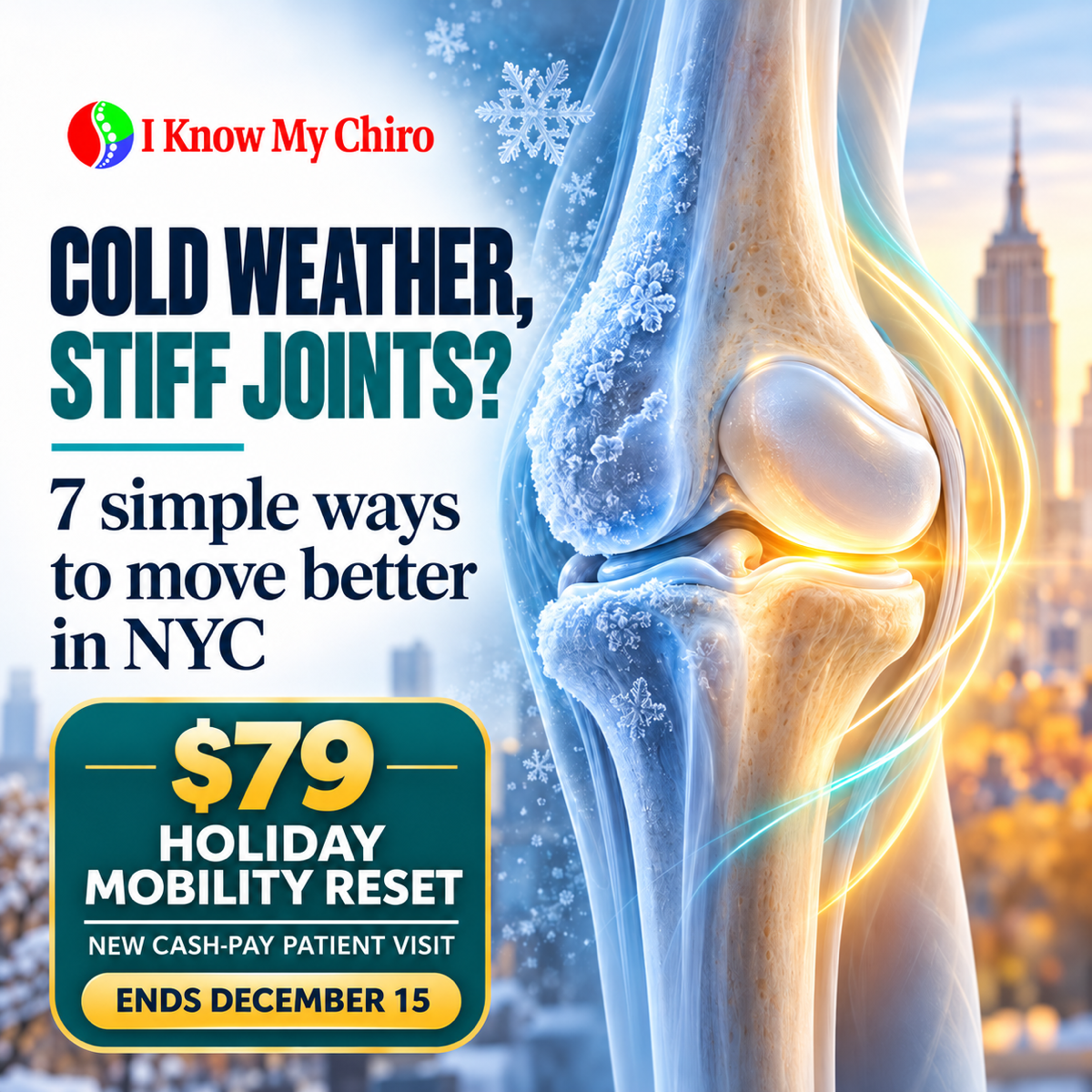
This month, education and savings come together. Eligible new cash-pay patients can request the $79 Holiday Mobility Reset through December 15, 2026. The visit includes a consultation, initial examination, and first chiropractic treatment when clinically appropriate. Insured patients are welcome, but they follow their normal insurance benefits rather than the promotional cash-pay price.
Table of Contents
Does Cold Weather Joint Stiffness Mean the Weather Is Damaging Your Joints?
Feeling stiffer on a cold day does not necessarily mean that cold air is damaging your joints. In a 2024 systematic review and meta-analysis, researchers examined weather factors and several musculoskeletal conditions. They concluded that weather changes did not appear to be risk factors for rheumatoid arthritis, knee, hip, or low back pain, although the findings were different for gout.
That does not mean your experience is imaginary. The season changes more than the thermometer. Shorter days can reduce walking and outdoor activity. Cold commutes may encourage people to tense their shoulders or move cautiously. Hours on a couch or at a desk can replace summer movement. Heavy coats and bags can change how the upper body is carried. An old injury or an irritated joint may also become more noticeable when your routine changes.
The useful question is not simply, “Is cold weather causing this?” A better question is, “What changed in my movement, posture, activity, recovery, or health—and what helps?”
1. Warm Up Before You Rush Outside
Going directly from bed or a desk into a fast walk toward the subway can feel abrupt. Give your body a few minutes to transition before leaving home or the office.
A brief indoor warm-up can be a practical first response to cold weather joint stiffness before a commute, workout, or busy day.
Try easy, comfortable movements such as shoulder rolls, gentle trunk turns, ankle circles, marching in place, or a brief walk around the room. The goal is not to force a deeper stretch. It is to begin moving through a comfortable range and let your muscles prepare for the activity ahead.
If a movement causes sharp pain, new numbness, or symptoms that travel into an arm or leg, stop and seek individualized guidance rather than pushing through it.
2. Use Short Movement Breaks Throughout the Day
Cold weather joint stiffness may feel worse after the body has stayed in one position for a long time. This matters in Manhattan, where a workday can include a long train ride, hours at a computer, another commute, and an evening on the couch.
Because cold weather joint stiffness often becomes noticeable after sitting, set a reminder to change position regularly. Stand up, walk to refill your water, gently move your shoulders, or take a brief lap around the office. Even a small movement break interrupts prolonged sitting and gives you a chance to notice whether your workstation or posture is adding strain.
A perfect posture is not required. In fact, the most useful posture is often the next one. Supported sitting, standing, walking, and other comfortable positions can all be part of the day.
3. Keep Your Body Comfortably Warm
Dress for the full trip, not just the temperature inside the office. Layers allow you to adjust as you move between the street, subway, lobby, and heated rooms. Gloves, warm socks, and supportive footwear can make outdoor walking more comfortable.
For many New Yorkers, cold weather joint stiffness becomes more noticeable while waiting outdoors or walking between heated and unheated spaces.
A bulky coat should still allow your shoulders and arms to move freely. If a coat, scarf, backpack, or heavy shoulder bag changes how you walk or makes you brace, adjust the fit or redistribute the load. Switch sides when carrying a bag, use both backpack straps, and avoid carrying more than you need.
Warmth can be soothing, but it is not a substitute for evaluation when a joint is newly swollen, red, hot, injured, or severely painful.
4. Maintain Joint-Friendly Activity
When November weather reduces your usual walking, replace that movement intentionally. Indoor walking, stationary cycling, swimming, gentle exercise classes, and appropriately selected strengthening exercises can help preserve a regular routine.
The Centers for Disease Control and Prevention reports that physical activity can help people with arthritis reduce joint pain and improve function and mood. It recommends choosing activities that cause little or no joint pain and beginning slowly. Five- or ten-minute sessions can be a manageable starting point.
Your best cold weather joint stiffness activity plan depends on your current health, symptoms, experience, and goals. Someone recovering from an injury may need a different plan from a healthy person who simply became less active after summer.
5. Reset Your Winter Workspace
Seasonal habits can quietly change a workstation. You may work farther from a window, use a laptop from the couch, or hunch toward a device while wearing extra layers. These changes can contribute to neck, shoulder, and back fatigue.
Place the screen where you can view it without repeatedly craning forward. Keep frequently used items within comfortable reach. Support your feet when needed, and let your shoulders relax instead of holding them upward. If you use a laptop for long periods, a separate keyboard and mouse may make it easier to arrange the screen and hands independently.
Ergonomics cannot eliminate every symptom, but a comfortable setup combined with regular movement can reduce unnecessary strain. Our article on neck pain from desk work explains why discomfort often builds later in the workday.
6. Increase Activity Gradually and Watch the Pattern
A sudden burst of exercise after several inactive weeks may leave anyone sore. Start with an amount you can manage and increase time, distance, resistance, or intensity gradually. Pay attention to the pattern rather than judging one moment in isolation.
Ask yourself:
- Does the stiffness ease after a few minutes of comfortable movement?
- Is it limited to one area or present throughout the body?
- Did it begin after an injury, illness, new workout, or change in routine?
- Is there swelling, redness, warmth, weakness, numbness, or loss of function?
- Is it improving, staying the same, or becoming more frequent?
Tracking cold weather joint stiffness alongside your activity can help you recognize triggers and give a healthcare professional more useful information if you need an evaluation.
7. Get Persistent Cold Weather Joint Stiffness Evaluated
If stiffness persists, keeps returning, limits normal activity, or comes with pain, an individualized assessment can help identify what deserves attention. Similar symptoms can arise from very different causes, so a label based only on the weather may delay appropriate care.
At I Know My Chiro, a visit begins with your history and an examination. Depending on the findings, recommendations may include education, activity or ergonomic changes, therapeutic exercise, chiropractic care, physical therapy, referral, or another approach. Manual treatment should support—not replace—an active, individualized plan. A systematic review of high-quality musculoskeletal guidelines similarly identified physical examination, education, exercise, progress monitoring, selective imaging, and manual therapy only as an adjunct among consistent best-practice recommendations.
Seek urgent medical attention for severe symptoms after significant trauma; sudden weakness or loss of coordination; new loss of bladder or bowel control; numbness in the groin or saddle area; a red, hot, markedly swollen joint; fever with joint pain; chest pain; difficulty breathing; or another potential emergency.
Holiday Mobility Reset: $79 New Cash-Pay Patient Visit
Cold-weather routines, holiday travel, longer periods of sitting, and busy seasonal schedules can make existing stiffness more noticeable. The $79 Holiday Mobility Reset provides eligible new cash-pay patients with a clear way to begin with an individualized assessment.
If cold weather joint stiffness continues despite reasonable activity and routine changes, an examination can help determine whether a musculoskeletal concern deserves individualized attention.
The promotional visit includes:
- Consultation: A conversation about your current concern, relevant health history, daily activities, previous injuries, and goals.
- Initial examination: An assessment selected for your presentation, which may include appropriate movement, orthopedic, neurological, postural, or musculoskeletal observations.
- First chiropractic treatment: Treatment may be provided during the visit only when the history and examination indicate that it is clinically appropriate and informed consent is completed.
The examination comes before treatment because similar symptoms can have different causes. The promotional price does not guarantee an adjustment, pain relief, a diagnosis, or a particular treatment plan. If another professional, diagnostic test, urgent evaluation, or different type of care appears more appropriate, treatment may be modified, postponed, or not provided.
Offer ends: December 15, 2026.
Eligibility: New cash-pay patients only.
Included: Consultation, initial examination, and first chiropractic treatment when clinically appropriate.
Not included: Imaging, laboratory testing, acupuncture, massage therapy, additional procedures, supplies, and follow-up visits unless expressly stated in writing.
Insurance: The promotion is not submitted to insurance. Insured patients who use their benefits follow their plan's eligibility, coverage, deductible, copayment, coinsurance, authorization, visit-limit, network, medical-necessity, and exclusion rules.
Additional terms: One promotional visit per eligible person. No cash value. Cannot be combined with another discount or offer. Not valid for Medicare, Medicaid, workers' compensation, no-fault, or personal-injury claims. Treatment is not guaranteed and depends on history, examination, clinical appropriateness, and informed consent. Appointment requests are subject to availability and office confirmation.
Frequently Asked Questions About Cold Weather Joint Stiffness
Can cold weather make arthritis worse?
Some people report that their symptoms vary with the weather, but research has not established ordinary weather changes as a general cause of rheumatoid arthritis, knee pain, hip pain, or low back pain. Your activity level, sleep, stress, routine, and underlying condition may also influence how you feel. Discuss significant or changing symptoms with a qualified healthcare professional.
Should I rest until the stiffness disappears?
Complete inactivity is not usually the best response to ordinary stiffness. Comfortable, joint-friendly movement may help, and the CDC encourages people with arthritis to be as active as they can. However, severe pain, an acute injury, neurological symptoms, fever, redness, or major swelling requires a different response and may need prompt evaluation.
Is stretching enough?
Stretching can be one part of a routine, but mobility, strength, aerobic activity, recovery, and the reason for your symptoms all matter. Avoid forcing a painful range. A personalized plan is more appropriate when symptoms persist or limit daily activity.
Can a chiropractor help with stiffness?
A chiropractor can evaluate musculoskeletal symptoms and determine whether chiropractic care is appropriate. Depending on the findings, care may include education, exercise, activity guidance, and manual techniques. No examination or treatment can guarantee relief, and referral may be appropriate when symptoms fall outside the chiropractor's scope or require additional evaluation.
Can I use insurance with the $79 Holiday Mobility Reset?
No. The $79 rate is for eligible new patients paying directly without insurance submission. Patients who want insurance billed follow their plan's normal benefits and required cost sharing. Benefit verification is not a guarantee that an insurer will pay a claim.
Does the $79 visit guarantee an adjustment?
No. The first treatment is included only when clinically appropriate. The examination may identify a reason to change, postpone, or avoid a treatment or to recommend another type of care.
Keep Moving as New York Gets Colder
Cold weather joint stiffness does not have to be dismissed as “just the season.” Small changes—warming up, moving more often, staying comfortably warm, maintaining activity, improving your workspace, and progressing gradually—may make everyday movement easier. Persistent or concerning symptoms deserve an evaluation based on your health and presentation, not assumptions about the forecast.
I Know My Chiro is located at 35 E 38th Street, Suite 1B, New York, NY 10016, near Grand Central, Bryant Park, and Murray Hill. Request an appointment online or visit our contact page to discuss scheduling. Eligible new cash-pay patients should mention the $79 Holiday Mobility Reset when requesting an appointment before December 15.
This article provides general educational information and is not a diagnosis or a substitute for individualized medical advice, examination, or emergency care. Results and appropriate treatment vary by person.