

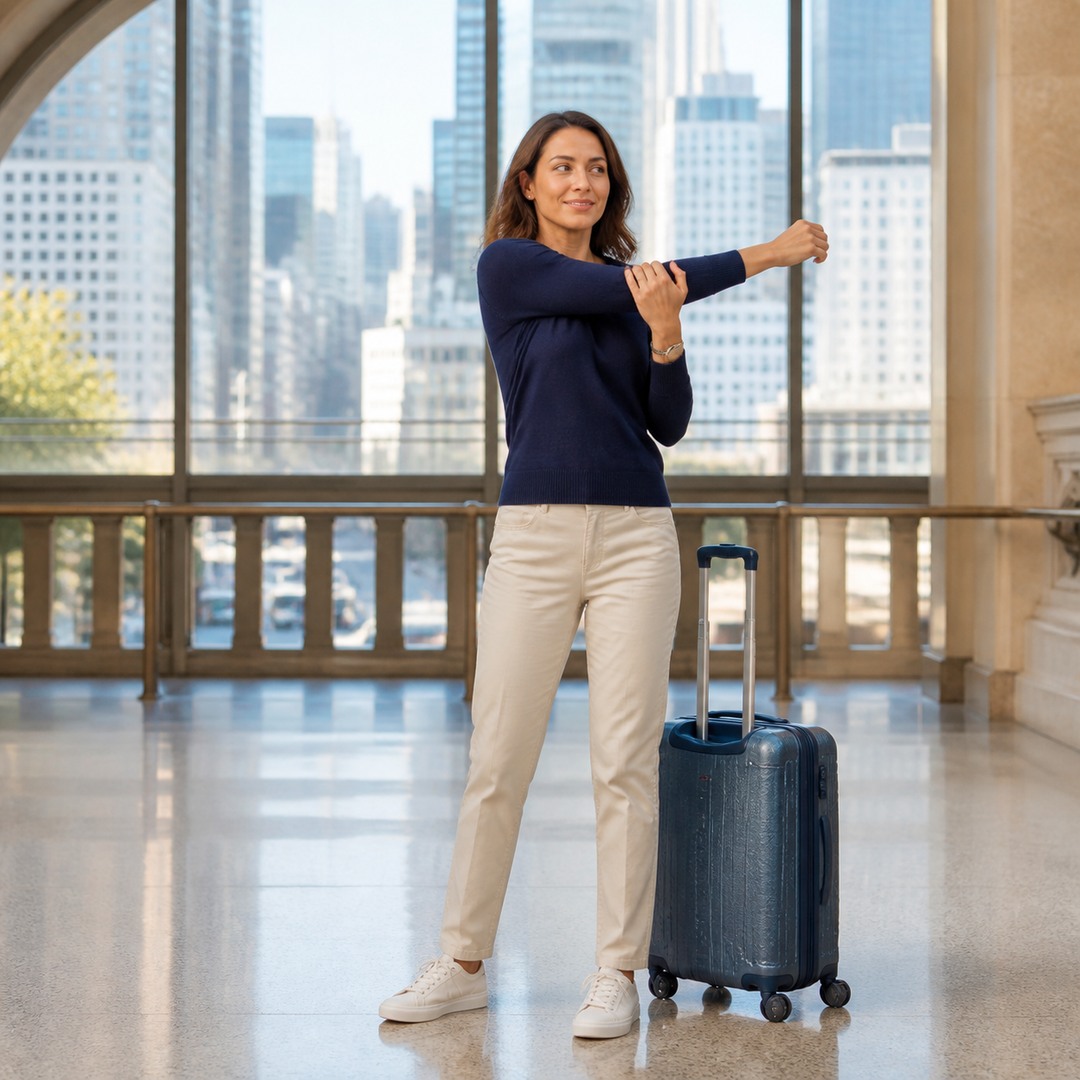
Labor Day Travel Without Back Pain: 7 Tips From a Manhattan Chiropractor
Travel back pain tips can make a meaningful difference when Labor Day plans involve a long flight, road trip, train ride, or hours of carrying luggage. Travel often combines prolonged sitting, unfamiliar seats, heavy bags, and a sudden change in routine. Those factors can leave your lower back, neck, and shoulders feeling stiff before the vacation has really begun.
This guide shares seven practical travel back pain tips from a Midtown Manhattan chiropractor. Use them before, during, and after your trip to reduce avoidable strain and stay more comfortable. The information is educational and does not replace an individual medical evaluation.
Table of Contents
1. Travel Back Pain Tips Begin Before You Leave Manhattan
A comfortable trip starts while you are still packing. Choose the lightest suitcase that meets your needs, remove items you are unlikely to use, and place heavier objects near the bottom and center of the bag. A rolling suitcase can reduce the amount of time you spend carrying weight through subway stations, airport terminals, and hotel corridors.
Think about the most demanding part of the route. Will you need to carry the bag down subway stairs, lift it into an overhead compartment, or load it into a car trunk? If the bag feels difficult to control at home, it will not become easier in a crowded terminal. Divide the load, check a heavier suitcase, or ask for assistance rather than forcing an awkward lift.
If you already have recurring back or neck discomfort, avoid waiting until the night before departure to address it. A focused evaluation can help identify movement limitations and discuss reasonable strategies for your specific itinerary.
2. Create a More Supportive Position on the Plane, Train, or in the Car
Travel seats are designed to accommodate many body types, not to fit any one person perfectly. Start by sitting fully back instead of perching at the front edge. Keep both feet supported when possible and avoid crossing your legs for the entire trip. A small rolled sweatshirt or travel cushion behind the lower back may feel more supportive if the seat leaves a large gap.
Keep frequently used items within easy reach. Repeatedly twisting toward a bag under the seat or reaching behind you can irritate an already stiff back. Place your phone, water, medication, and travel documents where you can reach them without a deep bend or rotation.
For drivers, adjust the seat before moving the car. You should be able to reach the wheel and pedals without locking your elbows, reaching with your toes, or rounding your shoulders forward. Mirrors should be positioned so you do not need to twist repeatedly to see them.
3. Use Movement as One of Your Most Important Travel Back Pain Tips
Even a comfortable posture can become uncomfortable when held for several hours. Change position periodically rather than searching for one “perfect” posture and remaining there. On a road trip, plan safe stops that let everyone stand and walk. On a plane or train, use appropriate opportunities to get up without blocking the aisle or ignoring crew instructions.
The CDC’s travel guidance recommends moving the legs frequently during long trips and exercising the calf muscles. The CDC notes that trips longer than four hours by air, car, bus, or train can increase blood-clot risk for some travelers, particularly when other risk factors are present. The overall risk is generally small, but travelers with a history of blood clots or other risk factors should speak with their medical provider before departure.
Simple seated movements can include ankle pumps, gentle shoulder rolls, and relaxing your hands after gripping a phone or steering wheel. Movements should remain comfortable and controlled. Stop if an exercise produces sharp pain, dizziness, numbness, or worsening symptoms.
4. Lift and Store Luggage Without Bending and Twisting Together
Luggage handling is one of the easiest moments for a trip to go wrong. Turn your entire body toward the suitcase, bring the load close, and use both hands when possible. Avoid planting your feet while twisting through the torso to place a bag in a trunk or overhead compartment.
The American Academy of Orthopaedic Surgeons’ luggage guidance recommends thoughtful packing and careful lifting. For an overhead compartment, it suggests first lifting the bag to the top of the seat, placing both hands on the suitcase, and then moving it into position. If you cannot complete the lift smoothly, ask for help.
Do not rush to catch a falling suitcase. Step away and protect yourself and others. A damaged bag is inconvenient; an injury can affect the entire trip.
5. Balance the Weight of Backpacks, Totes, and Personal Items
A carry-on may receive the most attention, but the smaller personal bag is often worn for much longer. A backpack with two padded, adjustable straps distributes weight more evenly than carrying the load over one shoulder. Pack heavier items low and near the center rather than placing them in an outside pocket that pulls the bag away from your body.
If you use a tote or shoulder bag, lighten it and switch sides periodically. Better still, place it on top of the rolling suitcase when the luggage design allows it to remain secure. Avoid walking through Midtown or an airport with a laptop, water bottle, and travel essentials pulling on the same shoulder for an hour.
These travel back pain tips also apply to families. Adults often end up carrying their own bags plus a child’s backpack, stroller, or car seat. Decide in advance how the equipment will be divided so one person is not managing every heavy item.
6. Plan for Unfamiliar Beds and Travel Sleep
A hotel mattress or guest-room pillow may feel very different from what you use at home. You cannot control every sleeping surface, but you can bring a compact pillow or rolled towel if it helps you maintain a familiar neck position. Side sleepers may feel more comfortable with a pillow between the knees, while back sleepers may prefer support beneath the knees. Comfort varies, so use the position that lets you relax without forcing your spine into an awkward angle.
Try not to fall asleep for hours with your neck bent forward in a terminal chair. If you plan to sleep while seated, use support that keeps the head from repeatedly dropping to one side. When you wake, change position gradually rather than immediately lifting a heavy bag with stiff muscles.
Travel can also disrupt the routines that normally keep you moving. A short walk, a calm mobility routine, or the habits from our August back-to-routine guide can help you reintroduce activity without turning the first vacation day into an intense workout.
7. Reset After You Arrive Instead of Staying Still
After hours of sitting, it may be tempting to drop the bags and remain on the couch. Many travelers feel better after a short, easy walk and a gradual return to normal movement. Unpack in stages, place the suitcase on a stable elevated surface if appropriate, and avoid repeatedly bending to the floor while twisting.
Mild stiffness that improves with comfortable movement is different from severe or progressive symptoms. Seek urgent medical attention for chest pain, shortness of breath, unexplained swelling or warmth in one leg, major weakness, loss of bladder or bowel control, numbness around the groin or saddle area, fever with back pain, or pain after a serious fall or collision.
If back pain, neck tension, headaches, numbness, or restricted movement continue after the trip, an assessment may help clarify contributing factors. At I Know My Chiro, Dr. Victor Casanova considers your health history, symptoms, movement, and goals before recommending care. Depending on clinical findings, a personalized plan may involve chiropractic care, mobility work, therapeutic exercise, or soft-tissue techniques.
Labor Day Travel-Ready Special: $70
Prepare for your trip—or address discomfort after returning—with a focused visit at I Know My Chiro in Midtown Manhattan.
- Includes: Consultation and chiropractic treatment when clinically appropriate
- Offer dates: August 15 through September 14, 2026
- Eligibility: Self-pay patients
Terms: Self-pay only. Treatment is subject to clinical evaluation and appropriateness. Additional services are not included. Cannot be combined with insurance benefits or other offers. One promotional visit per patient.
Book your travel-ready visit online or contact our Midtown Manhattan office.
Travel Back Pain Tips: Your Quick Checklist
- Pack lighter than the maximum amount you think you can carry.
- Keep the lower back supported and both feet stable while seated.
- Change position and move your legs during long trips.
- Use both hands and keep luggage close when lifting.
- Avoid bending and twisting at the same time.
- Use both backpack straps and balance smaller bags.
- Return to comfortable movement gradually after arrival.
- Seek professional guidance for persistent, worsening, or concerning symptoms.
Frequently Asked Questions
Why does my back hurt after flying or driving?
Long periods in one position, limited space, unfamiliar seating, luggage handling, and changes in normal activity may all contribute. The cause differs from person to person, especially when there is a previous injury or an existing back condition.
How often should I move during a long trip?
There is no single schedule that fits every traveler. The CDC encourages travelers to move their legs frequently and, when appropriate, walk periodically during long trips. Follow transportation safety rules, and speak with your physician before travel if you have additional blood-clot risk factors.
Should I use a lumbar pillow on a plane?
A small cushion or rolled sweatshirt may feel helpful if it fills an uncomfortable gap behind the lower back. It should support a relaxed position rather than force an exaggerated arch. Remove it if it increases discomfort.
Can chiropractic care guarantee that I will not have pain while traveling?
No treatment can guarantee a pain-free trip. An individualized evaluation may identify mobility limitations, existing symptoms, and practical strategies, but results and appropriate care vary by patient.
Where is I Know My Chiro located?
I Know My Chiro is located at 35 E 38th Street, Suite 1B, convenient to Grand Central, Bryant Park, and Murray Hill. Visit our contact page for directions and appointment information.
Start Your Labor Day Trip With a Better Plan
The most effective travel back pain tips are usually simple: pack thoughtfully, support your seated position, move regularly, lift close to your body, and pay attention when symptoms persist. A little preparation can make the trip easier on your back and neck without turning travel into a complicated wellness project.
For individualized guidance, call I Know My Chiro at 212-933-0188 or schedule an appointment online.